

How to Spot Fake Luxury Goods?
Last Updated: October 26, 2026
Quick Summary
To spot fake luxury goods, inspect logos, fonts, and brand markings for clarity and consistency, then examine hardware weight and finish quality, assess material quality and stitching, and verify serial numbers using the brand's verification database. No single check is definitive, so use multiple verification methods and buy from authorized retailers with proof of purchase.
- Examine logo clarity, font consistency, placement, depth, and color accuracy on the item
- Check hardware weight, sound quality, finish, engravings, and secure attachment
- Inspect leather or fabric feel, quilting patterns, seams, edges, and interior lining for quality
- Verify serial number location, format, readability, and use the brand's verification tool if available
- Buy from authorized retailers with proof of purchase and use payment methods with buyer protection
Table of Contents
- Why Spotting Fake Luxury Goods Matters
- Step 1: Inspect Logos, Fonts, and Brand Markings
- Step 2: Examine Hardware, Weight, and Finish Quality
- Step 3: Assess Material Quality, Stitching, and Craftsmanship
- How to Tell If a Designer Bag Is Real Through Serial Number Checks
- Designer Bag Authenticity Checklist and Verification Process
- Luxury Item Serial Number Check and Product Code Verification
- Understanding First Copy Bag Meaning and High-Quality Counterfeits
- Frequently Asked Questions
Why Spotting Fake Luxury Goods Matters
Counterfeit goods have become increasingly sophisticated. High-quality counterfeits can fool even experienced buyers.
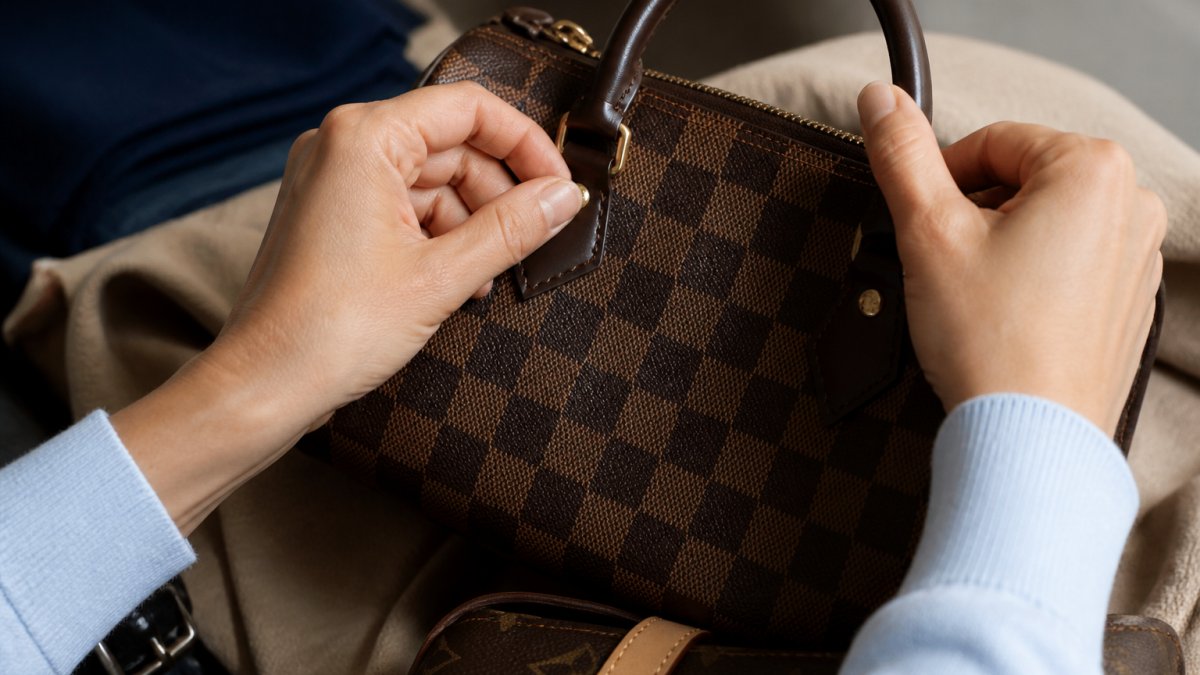
Step 1: Inspect Logos, Fonts, and Brand Markings
Start with what's visible.
Look closely at these details:
- Logo clarity,
- Font consistency,
- Placement,
- Depth and dimension,
- Color accuracy,
Focus on these visible elements when examining a luxury item for authenticity.
| Element | What to Check |
|---|---|
| Logo clarity | Sharpness and definition of the brand logo |
| Font consistency | Uniform typeface and letter spacing throughout |
| Placement | Correct positioning on the item |
| Depth and dimension | Proper embossing or engraving relief |
| Color accuracy | Exact match to official brand colors |
Step 2: Examine Hardware, Weight, and Finish Quality
Check these hardware elements: You can inspect a luxury watch product to evaluate hardware quality, weight, and finish.
- Weight and density,
- Sound test,
- Finish quality,
- Engravings,
- Attachment,
Examine our authentic luxury watch product to evaluate hardware quality and finish | page:2
Step 3: Assess Material Quality, Stitching, and Craftsmanship
Evaluate materials this way: You can view authentic luxury jewelry to assess material quality and craftsmanship standards.
- Leather feel,
- Fabric weight,
- Quilting and texture,
- Seams and edges,
- Interior lining,
View authentic luxury jewelry to assess material quality and craftsmanship standards | page:3
How to Tell If a Designer Bag Is Real Through Serial Number Checks
Here's what to check: You can examine an authentic designer bag to compare serial numbers and verification details.
- Serial number location,
- Format consistency,
- Readability,
- Verification database,
Explore our designer bag collection to compare authentic serial numbers and verification details | page:1
Designer Bag Authenticity Checklist and Verification Process
Visual Inspection:
- Examine the logo for clarity, font consistency, and correct placement
- Check all brand markings and text
- Look for spelling errors or inconsistencies
- Compare with official product photos from the brand's website, not reseller photos
Hardware Assessment:
- Test weight and density
- Listen for a solid sound when tapped
- Inspect finish quality and engravings
- Verify secure attachment and professional soldering
Material Evaluation:
- Feel the leather or fabric
- Check for an authentic smell, not chemical or plastic odors
- Examine quilting patterns for uniformity
- Inspect seams and edges for quality
Serial Number Verification:
- Locate the serial number in the correct position for that brand and model year
- Verify the format matches the brand's standard
- Use the brand's verification tool if available
- Cross-reference with resale marketplace verification, but do not treat a scannable code as proof of authenticity
Seller Verification (Before You Commit):
- Research the seller's history, ratings, and feedback across multiple platforms
- Ask for proof of purchase, original receipts, or authenticity documentation
- Request multiple high-quality photos in natural light, including close-ups of logos, hardware, and interior labels
- Confirm the return policy in writing, including who pays return shipping and whether returns are accepted for authenticity disputes
- Use payment methods with buyer protection, such as credit cards or established marketplace escrow, and avoid wire transfers or peer-to-peer payments
- Check whether the marketplace authenticates items before shipping and what recourse you have if an item is later found counterfeit
Limits of Visual Checks:
Luxury Item Serial Number Check and Product Code Verification
Here's how to evaluate them:
- Barcode quality,
- Holographic labels,
- QR codes,
- Placement,
Understanding First Copy Bag Meaning and High-Quality Counterfeits
- Better materials,
- Improved stitching,
- Accurate details,
- Convincing packaging,
- Copied codes,
Which checks are inconclusive:
- A scannable QR code or NFC tag does not prove authenticity; counterfeiters can link codes to copied verification pages
- A serial number that matches the brand's format can still be copied from a genuine item
- Packaging and dust bags are among the easiest elements to replicate
- A seller's positive ratings can be inflated or purchased
- Photos alone cannot confirm material feel, hardware weight, or smell
When to stop inspecting and use an expert:
How to protect yourself from high-quality counterfeits:
- Buy from authorized retailers or sellers with verifiable proof of purchase
- Verify seller credentials and history across multiple platforms
- Request authentication documentation and confirm it comes from a recognized service
- Use multiple verification methods and accept that no single check is definitive
- Use payment methods with buyer protection and avoid irreversible transfers
- Trust your instincts, if something feels off, it probably is
If you discover a counterfeit after purchase:
Frequently Asked Questions
How can I tell if a designer bag is real or fake?
Start by examining the logo clarity, font weight, and spacing, counterfeits often have blurry or misaligned logos. Check the hardware for weight and finish quality; authentic pieces use solid brass or gold-tone materials that feel substantial. Inspect stitching for consistency and evenness; genuine items have precise, even seams. Compare the item with a verified authentic example from the brand's official website. Finally, verify the serial number or date code with the manufacturer. High-quality counterfeits may pass one or two checks, so use multiple verification methods together.
What is a first copy bag?
A first copy bag is a high-quality counterfeit designed to closely mimic an authentic designer bag. Unlike obvious fakes, first copy bags use similar materials, construction techniques, and design details that can fool casual inspection. They're produced in unauthorized factories and sold at suspiciously low prices. While they may look and feel similar to genuine items, they lack proper serial numbers, have inconsistent craftsmanship in details, and do not hold value. Purchasing first copy goods supports counterfeit operations and carries legal and ethical risks.
Can I verify a luxury product using its serial number?
Yes, serial numbers and date codes are powerful authenticity tools. Most luxury brands include unique product numbers, date codes, or barcodes inside tags, on leather patches, or engraved on hardware. Check the manufacturer's official website or contact their customer service with a photo of the serial number to verify it. Be aware that counterfeiters sometimes copy real serial numbers, so combine this check with visual inspection of logos, materials, and craftsmanship. If the serial number doesn't match the item's style or era, that's a red flag.
What should I do if I think I bought a counterfeit luxury product?
Stop using the item immediately to avoid supporting the counterfeit market. Document everything: take photos of logos, serial numbers, packaging, and any inconsistencies. If you purchased from a resale marketplace or authorized retailer, report the seller and file a complaint with the platform. Contact the brand directly with evidence; many luxury houses have authentication teams and may help. Report the seller to relevant consumer protection agencies. Consider consulting a lawyer if you spent significant money. Avoid reselling the item, as this perpetuates counterfeit circulation.
