

Eco Friendly Home Essentials 2026: Products Worth Buying
Quick Summary
The best eco friendly home essentials in 2026 are durable pieces you will use for years rather than replace after a season. Focus first on tableware, cleaning tools and outdoor items, and judge each product by its build, material and cost-per-use.
- Cost-per-use matters more than sticker price, since a durable item used for ten years is cheaper per season.
- The 16-piece MALACASA Relief White set is dishwasher and microwave safe, according to its listing.
- The MALACASA Square Dinnerware Set covers six people with 28 pieces, including salt and pepper pots.
- The JHK 8x4x1ft raised bed is galvanised steel with an open base for drainage.
- Choose three swaps this year, starting with items you replace most often.
Table of Contents
- Why Eco Friendly Home Essentials Matter Now
- How We Chose These Picks: Durability, Materials and Cost-Per-Use
- Eco Friendly Kitchen Products Worth Buying
- Eco Friendly Cleaning Products for a Lower-Waste Routine
- Sustainable Home Decor That Lasts Longer
- Zero-Waste Home Essentials and Outdoor Upgrades
- Choosing Your First Three Swaps This Year
- Frequently Asked Questions
Last Updated: November 1, 2026
Eco friendly home essentials 2026 are no longer a niche interest, and shoppers now expect the things they bring into their homes to last.
Because our research on this topic was limited, we have kept claims to what we can verify and to what the product listings themselves say. Where a figure is not confirmed, we say so rather than guess.
Why Eco Friendly Home Essentials Matter Now
Buying less and buying better is the simplest way most households can reduce waste. A product that lasts three times longer than a cheap substitute has a smaller footprint over its life, even before you count the packaging and shipping of replacements.
Many shoppers find that the real saving comes from fewer repurchases. A durable dinner set or a sturdy planter costs more upfront, but it avoids the cycle of buying, breaking and buying again.
How We Chose These Picks: Durability, Materials and Cost-Per-Use
We judged each product on three things: how it is built, what it is made of, and how often you are likely to use it. Cost-per-use matters more than sticker price. A $100 garden bed used for ten years is cheaper per season than a $30 one that warps in two.
We also read each listing closely. Where a listing states a material, a certification or a feature, we mention it. Where it does not, we do not fill the gap with assumptions. Check the listing yourself before you buy, and treat anything we have not confirmed as unverified.
Eco Friendly Kitchen Products Worth Buying
Kitchen items see the most daily wear, so durability pays off fastest here. The MALACASA stoneware sets in our catalogue are one example.
Larger households may prefer the MALACASA Square Dinnerware Sets, which cover six people with 28 pieces including salt and pepper pots. The listing describes the porcelain as lead and cadmium free. For a bigger table, the 48-piece MALACASA Ivory White set adds more place settings.
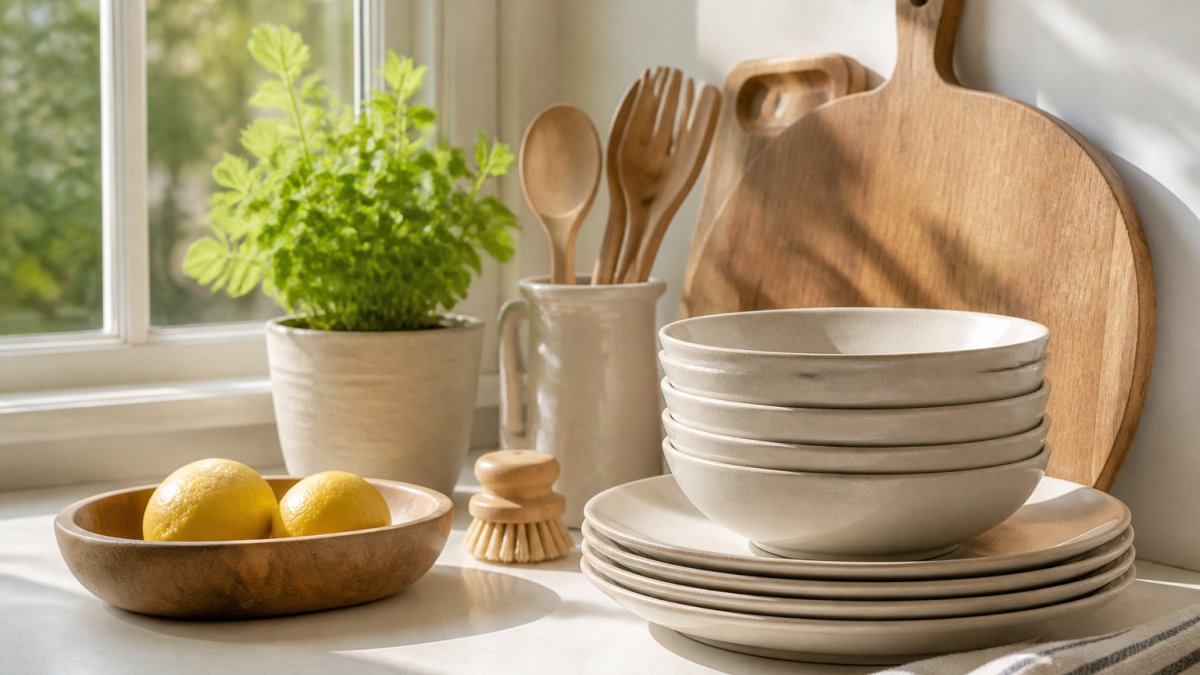
Explore our full kitchen range on the dinnerware collection page.
The article's kitchen picks are summarised below so you can compare the dinnerware sets at a glance.
| Set | Pieces | Best for |
|---|---|---|
| MALACASA Relief White | 16 pieces | Everyday use, dishwasher and microwave safe |
| MALACASA Square Dinnerware | 28 pieces | Six people, includes salt and pepper pots |
| MALACASA Ivory White | 48 pieces | Larger tables and more place settings |
Eco Friendly Cleaning Products for a Lower-Waste Routine
Cleaning is one of the highest-frequency categories in the home, which makes it the fastest place to see a return on a durable or refillable swap. This section gives you a decision framework rather than a product list: what to compare and which swaps are worth considering first. The goal is to help you judge any cleaner or tool on evidence rather than on the word "eco-friendly" on the label.
Compare the refill model, not just the bottle
A lower-waste cleaning routine usually comes down to three mechanics: refilling rather than rebuying, choosing concentrates over ready-to-use sprays, and keeping a small set of reusable cloths in place of disposable wipes. When you compare two products, ask:
- Is the bottle designed to be refilled? A refillable bottle with a concentrate sachet or tablet typically ships far less water and plastic per use than a ready-to-use spray. Check whether refills are actually sold in your region, a refillable bottle with no refill supply chain is just a bottle.
- What is the dilution ratio? A concentrate that makes multiple bottles per unit usually wins on packaging per use, but only if you will actually mix it. If the ratio is fiddly, most households drift back to ready-to-use.
- What is the packaging made of, and can you recycle it locally? Look for refill formats that are paper-based, tablet-based, or returnable. Recycling access varies by municipality, so check your local rules before assuming a bottle will be recycled.
Reusable cloths and tools: lifespan is the whole argument
The sustainability case for reusable cloths, mops, and scrubbers rests entirely on lifespan and replacement frequency. A microfiber cloth that survives 100 washes replaces a very large number of disposable wipes; a cheap cloth that pills after 10 washes does not. When you assess a reusable cleaning tool, check:
- Stated washability. Listings often give a wash temperature and a number of cycles. Treat an unstated lifespan as unverified.
- Material composition. Cotton, linen, and cellulose blends biodegrade more readily at end of life than synthetic microfiber, but microfiber often lasts longer and picks up more dust. There is a real trade-off here, and the right answer depends on whether you prioritize durability or end-of-life.
- Repairability. Wooden handles that can be re-seated, mop heads that can be replaced separately from the handle, and scrubbers with replaceable heads all extend the life of the tool.
Prioritize these swaps first
If you are choosing where to start, the highest-impact cleaning swaps are usually the ones you use daily:
- Dish cloths and sponges, swapped most often, so a durable reusable version pays back fastest.
- All-purpose cleaner, a concentrate in a refillable bottle replaces the most single-use packaging over a year.
- Floor mop, a mop with a replaceable head outlasts disposable pad systems and avoids the pad supply chain entirely.
What to check before you buy
- Read the label for concentration and packaging, and check whether refills are stocked where you shop.
- Look for third-party certifications where they exist (for example, Safer Choice in the US or the EU Ecolabel), but treat an uncertified "natural" claim as marketing until the ingredient list backs it up.
- Check disposal and recycling instructions for the bottle, the cap, and any sachet or tablet wrapper, these often have different end-of-life paths.
Many households find it simpler to standardize on one refillable bottle and one concentrate they like, rather than buying a different "eco" spray for every surface.
Solar Pathway Light Outdoor Solar Lamp Waterproof Landscape Lighting for Garden →
Sustainable Home Decor That Lasts Longer
Decor is where sustainability claims are weakest and where durability matters most, because decor is bought for how it looks and replaced when it stops looking right. The most sustainable decor choice is usually the one you will still want in five years, and the one whose materials and end-of-life you can actually verify. This section covers how to judge decor on evidence, how to prioritize rooms, and where the solar lighting in our catalogue fits.
Judge decor on materials and end-of-life, not on the word "natural"
When you compare decor pieces, ask four questions:
- What is the material, specifically? Solid wood, reclaimed wood, linen, wool, and stoneware have different lifespans and end-of-life paths. A listing that says "wood" without naming the species or whether it is reclaimed is unverified.
- Is it repairable or refinishable? A piece that can be repaired stays out of landfill longer than one that cannot.
- What happens at end of life? Untreated or oiled wood, natural fibers, and ceramics are generally easier to dispose of responsibly than composites and mixed materials. Check whether your municipality accepts the material before you buy.
Prioritize rooms by impact
Not every room is worth the same effort. A practical order for most households:
- Living room and bedroom, textiles (throws, cushions, bedding) are replaced most often, so lower-impact fibers and durable weaves pay back fastest.
- Kitchen and dining, tableware and serveware see daily wear; durability is the whole argument (see the kitchen section above).
- Outdoor and patio, lighting and furniture face weather, so corrosion resistance and replaceable batteries matter more than trend.
- Hallway and entry, small, low-cost pieces where buying secondhand or reclaimed is usually the highest-impact choice.
Solar lighting: a decor category where durability is measurable
Outdoor lighting is a good example of decor where the sustainability case is concrete. A solar wall lamp or fence light can brighten a patio without a wired installation, which avoids trenching and electrical work.
For pathways, the solar pathway light is designed to charge in daylight and switch on at dusk.
When you compare solar lights, check three things the listings often bury:
- Battery replaceability. A solar light is only as durable as its battery. If the battery is sealed and not replaceable, the light's useful life is the battery's life. Ask the seller whether the battery can be replaced.
- IP rating. IP65 means protection against dust and water jets, which is suitable for most gardens. An unrated light is a short-lived one outdoors.
- Housing material. ABS and PC are durable plastics; metal housings resist weather differently and may be recyclable where plastics are not. Neither is automatically better, check local recycling access.
What to check before you buy decor
- Ask for the specific material and, where relevant, the certification.
- Check repairability: can the piece be refinished, reupholstered, or have parts replaced?
- Check end-of-life: will your municipality accept the material, and can components (batteries, fittings) be separated?
Browse the outdoor lighting range to compare options for your own space.
Zero-Waste Home Essentials and Outdoor Upgrades
Outdoor upgrades reward durability more than almost anything else. A metal raised garden bed is an option for outdoor growing that is built for repeated seasons of use.
The listings say the steel panels are corrosion-resistant and describe quick assembly. Check the listing for warranty details.
Explore the raised garden beds and dog bed collection for other long-lasting outdoor pieces.
Choosing Your First Three Swaps This Year
Start with the items you replace most often. For most households, that means tableware, cookware and anything used outdoors. Pick three swaps, buy the most durable version you can afford, and track how long each lasts.
A simple rule helps. Ask whether the product will still be in use in five years. If it will, it is probably worth the higher price.
Frequently Asked Questions
What are the best eco friendly home essentials to start with?
Start with items you use every day: a reusable dinnerware set you will not replace for years, a durable reusable cleaning cloth, and a simple outdoor lighting setup that runs on solar power. Prioritise products with clear material information and durable construction, since a long-lasting item usually has a lower impact than a cheap one that gets replaced within a year. Focus first on the rooms you use most, such as the kitchen, and add other swaps once the basics are in place.
Are eco friendly home products more expensive?
Some are, but the cost per use often evens out. A stoneware dinnerware set such as the MALACASA 24/48 piece set may cost more upfront than basic plates, and its listing describes it as microwavable and dishwasher safe. When comparing prices, divide the cost by how many years you expect to use the item. Solar lighting also runs without a wired electricity connection for outdoor areas. Buy fewer, better pieces rather than replacing disposable items every few months.
How can I tell whether a home product is genuinely sustainable?
Look for specific claims rather than general wording like natural or green. Check the material, the construction, and any certifications listed in the product details. Look for statements about being free of lead and cadmium, as stated in the MALACASA porcelain set listings, and for ratings such as IP65 water resistance on outdoor lights. A product that is clearly described and built to last is usually a better bet than one that only uses eco-friendly marketing.
What are easy ways to reduce waste at home?
Replace single-use items with reusable ones, starting with the kitchen and cleaning routine. Keep a set of reusable cleaning cloths in place of paper towels, and use durable dinnerware for everyday meals rather than disposables for guests. Repair or replace worn items before buying new ones, and choose products with durable materials so they stay in use longer. Small changes made consistently cut household waste more than one large purchase.
